
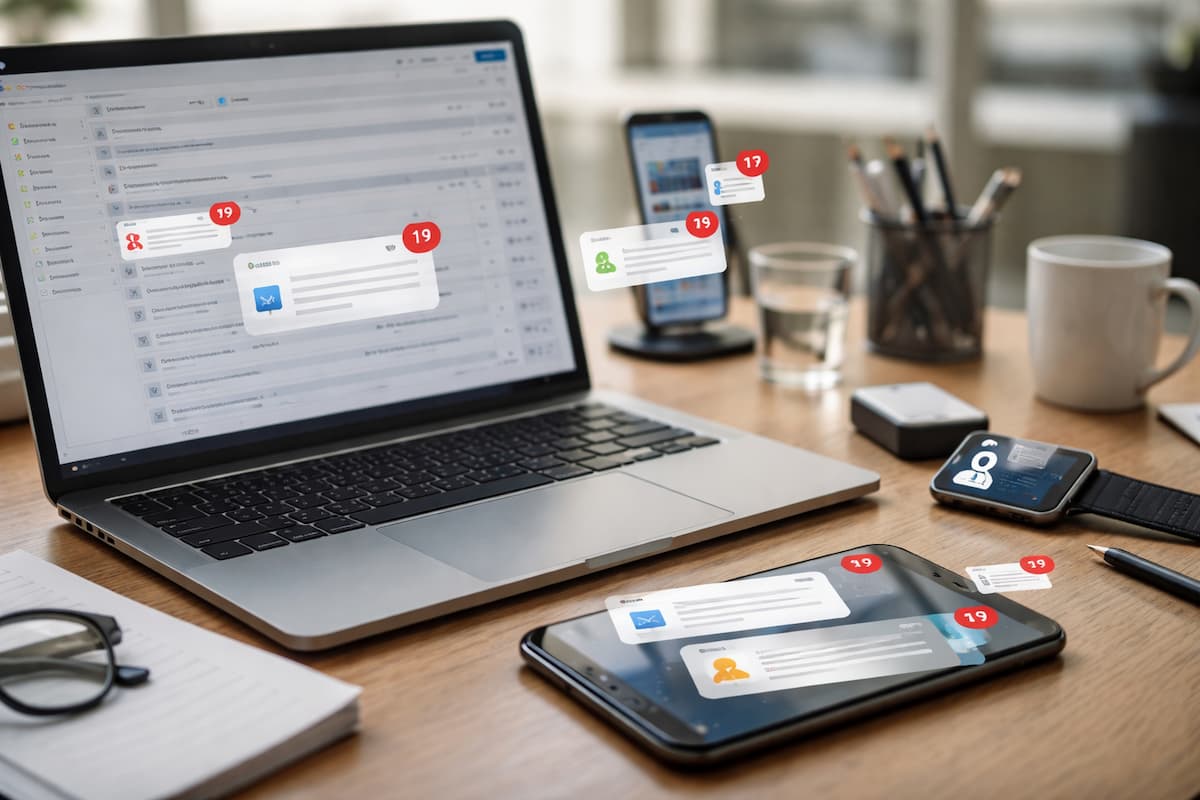
The Day I Realized My Attention Was Fragmented
A few years ago, I noticed something strange about my workdays. I was busy from morning until evening, yet by night I felt like I had accomplished very little. My to-do list stayed stubbornly full, my brain felt exhausted, and even simple tasks took longer than they should. One afternoon, while trying to write an email, my phone buzzed six times in ten minutes. That was the moment everything clicked. My focus wasn’t weak; it constantly faced interruptions. The real culprit was notifications.
Today, most of us live inside a constant stream of alerts: emails, social media, messages, news, reminders, and app updates. They seem harmless, even helpful. But in reality, these tiny interruptions silently chip away at our ability to think deeply, work efficiently, and feel calm. This article will help you understand how constant notifications disrupt your focus — and more importantly, how to fix it with practical steps you can start today.
Your Brain Was Never Designed for Constant Interruptions
Human brains evolved to focus on one major task at a time. Thousands of years ago, our ancestors needed long stretches of uninterrupted attention to hunt, build, or solve problems. The modern digital environment, however, forces the brain into rapid task-switching every few minutes.
Each notification forces your brain to:
- Pause the current task
- Shift attention to new information
- Decide how to respond
- Attempt to return to the original task
This process sounds quick, but cognitively it’s expensive. Neuroscientists call this context switching, and it drains mental energy faster than sustained focus. Even a quick glance at a notification can derail your mental flow.
The Hidden Cost of “Just Checking Quickly”
Most people believe they can check notifications quickly and return to work without consequences. I used to believe this theory was true too. But research and real-world experience say otherwise. Every interruption creates a residue effect. Part of your attention stays stuck on the new information, even after you return to the original task.
For example:
- You read a message from a colleague; your brain continues to think about the reply.
- You see a news alert → Your brain keeps processing the headline.
- You receive a social media notification → Your brain wonders who interacted and why.
This mental residue reduces clarity, slows decision-making, and increases mistakes.
A “5-second check” can reduce productivity for the next 10–20 minutes.
Why Notifications Feel Impossible to Ignore
If notifications are so harmful, why do we feel compelled to check them instantly?
Because apps are designed to trigger dopamine rewards—the same brain chemical linked to pleasure and motivation.
Notifications create a powerful psychological loop:
- An alert appears
- Curiosity spikes
- You check the notification
- You receive new information or social validation
- The brain releases dopamine
- Brain learns, “Checking feels good.”
Over time, this becomes a habit — even an addiction. This explains why we check phones without thinking, even when no notification arrives.
How Notifications Destroy Deep Work
Deep work is the ability to focus intensely on cognitively demanding tasks. Writing, studying, planning, coding, designing, and problem-solving all require deep work.
Notifications prevent deep work in three major ways:
1. They Break Mental Flow
Flow is the state where work feels effortless and time disappears. Notifications shatter this state instantly.
2. They Reset Your Focus Timer
It takes 10–25 minutes to regain full concentration after an interruption.
3. They Encourage Shallow Work
When interruptions are frequent, your brain adapts by avoiding deep tasks altogether and preferring quick, easy activities.
This is why you may feel busy but unproductive.
The Emotional Impact of Constant Alerts
Notifications don’t just affect productivity — they affect emotions.
Constant alerts create:
- Background stress
- Low-level anxiety
- Feeling of urgency
- Mental fatigue
Your brain remains in alert mode all day. This is why many people feel worn out even after a day of sitting at a desk. The exhaustion isn’t physical — it’s mental.
The Illusion of Multitasking
Many people pride themselves on multitasking. But true multitasking is a myth. What we call multitasking is actually rapid task switching.
Imagine trying to read a book while someone taps your shoulder every two minutes. You could technically finish the book—but it would take longer and feel frustrating. Notifications create the same effect digitally.
How Notifications Reduce Work Quality
When your focus is fragmented, the quality of your work drops significantly.
Common effects include:
- More errors in writing and calculations
- Poor decision-making
- Reduced creativity
- Slower problem-solving
Deep thinking requires uninterrupted mental space. Without it, ideas remain surface-level.
The Surprising Impact on Memory
One lesser-known effect of notifications is memory disruption.
When your attention shifts repeatedly:
- Information fails to move into long-term memory
- Learning becomes harder
- Retention drops dramatically
This phenomenon explains why students who study with phones nearby often struggle to remember material. Focus equals memory.
How Notifications Affect Personal Life Too
The impact isn’t limited to work.
Notifications interrupt:
- Conversations
- Family time
- Meals
- Relaxation
- Sleep
Checking your phone during conversations reduces emotional connection. Over time, such behavior can weaken relationships. Presence matters more than we realize.
The Sleep Disruption Problem
Nighttime notifications are especially harmful.
Phone alerts:
- Interrupt sleep cycles
- Reduce deep sleep quality
- Increase morning fatigue
- Affect mood and energy
Even silent notifications can disrupt sleep because your brain anticipates alerts. Better focus begins with better sleep.
Signs Notifications Are Hurting Your Focus
You might be experiencing notification overload if you:
- Feel busy but unproductive
- Check your phone without thinking
- Struggle to finish tasks
- Feel mentally tired by the afternoon.
- Frequently switch between apps
- Find it hard to read long content
If several of these feel familiar, notifications may be the cause.
The Power of Turning Off Non-Essential Notifications
One of the simplest productivity improvements is disabling unnecessary alerts.
Start by turning off notifications for:
- Social media apps
- Shopping apps
- News apps
- Games
- Promotions
- Non-urgent emails
You will not miss anything important.
But you will regain focus.
Creating Notification Check Windows
Instead of reacting instantly, schedule specific times to review notifications.
Example routine:
- Morning: Check messages and email
- Midday: Check again
- Evening: Final check
This transforms notifications from interruptions into planned activities.
Using Do Not Disturb Mode Strategically
Most devices offer Do Not Disturb mode—and it’s incredibly powerful.
Use it during:
- Deep work sessions
- Study time
- Meetings
- Family time
- Sleep hours
Allow only critical contacts to bypass it. This single change can dramatically improve focus.
Designing a Focus-Friendly Work Environment
Environment shapes behavior.
To reduce interruptions:
- Keep phone out of reach while working
- Use website blockers if needed
- Close unused browser tabs
- Silence desktop notifications
Small changes create big results.
The Unexpected Benefit: Mental Calm
After reducing notifications, many people notice:
- Lower stress
- Better mood
- Increased clarity
- Greater sense of control
Focus isn’t just productive — it’s peaceful.
Real Productivity Comes From Attention, Not Activity
Being busy isn’t the same as being productive.
True productivity comes from:
- Sustained attention
- Deep thinking
- Intentional work
- Reduced interruptions
Notifications steal these quietly, minute by minute.
How Small Changes Create Big Results
You don’t need to delete every app or live offline.
Even small adjustments can create giant improvements:
- Turning off non-essential alerts
- Scheduling check times
- Using Do Not Disturb mode
- Keeping phone away during focus sessions
These changes compound over time.
Conclusion
Constant notifications may seem harmless, but they quietly disrupt focus, reduce productivity, increase stress, and fragment attention. Every alert pulls your brain away from meaningful work and forces it into constant task switching. Over time, the result creates mental fatigue, lowers work quality, and affects personal life and sleep.
The good news is that the solution is simple and practical. By turning off non-essential notifications, scheduling check windows, using Do Not Disturb mode, and creating a focus-friendly environment, you can reclaim your attention and dramatically improve your productivity and mental clarity.
Your attention is one of your most valuable resources. Protect it carefully.
FAQs
1. Are all notifications detrimental for productivity?
No. Critical notifications like urgent calls or essential reminders can be advantageous. The problem comes from non-essential alerts that interrupt focus unnecessarily.
2. How long does it take to rebuild focus after an interruption?
It can take 10–25 minutes to fully regain deep concentration after a notification.
3. Should I turn off email notifications completely?
Many people benefit from checking email at scheduled times instead of reacting instantly. This reduces interruptions and improves productivity.
4. Will turning off notifications make me miss important messages?
Scheduling regular check times and allowing priority contacts to bypass Do Not Disturb mode prevents this.
5. How quickly will I notice improvement after reducing notifications?
Most people notice better focus and reduced stress within a few days of limiting notifications.